Written by Chillie Falls, AccessAdventure.net, June 11, 2026


7
For wheelchair travelers looking to experience iconic American history, breathtaking mountain scenery, and some of the most famous landmarks in the United States, Rapid City, South Dakota, is one of the best destinations in the American West. Known as the “Gateway to the Black Hills,” Rapid City serves as the perfect base for exploring Mount Rushmore, Crazy Horse Memorial, Custer State Park, and a variety of accessible attractions throughout western South Dakota.
For full-time power wheelchair users, Rapid City offers a surprisingly accessible experience. Many of the region’s major attractions have invested heavily in accessible pathways, visitor centers, ramps, elevators, and adapted transportation options. While some natural areas present challenges due to terrain, visitors can still enjoy many of the Black Hills’ most spectacular sights without sacrificing comfort or independence.
1. Explore Mount Rushmore National Memorial


5
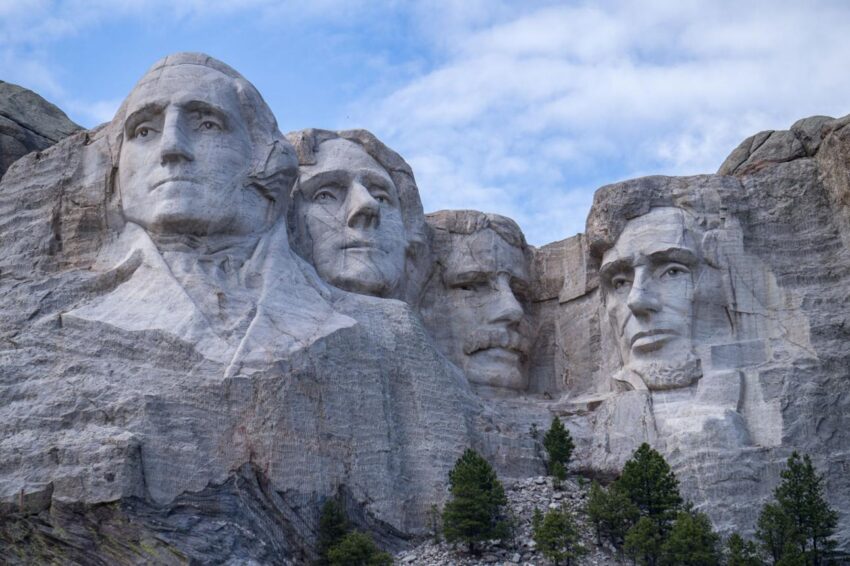
No visit to Rapid City would be complete without experiencing Mount Rushmore National Memorial. The massive sculpture features the faces of Presidents George Washington, Thomas Jefferson, Theodore Roosevelt, and Abraham Lincoln carved into the granite face of the Black Hills.
The History of Mount Rushmore
The idea for Mount Rushmore began in the early 1920s when South Dakota historian Doane Robinson sought a way to attract visitors to the state. Robinson envisioned a massive mountain sculpture that would celebrate American history and draw tourists to the remote Black Hills region.
Renowned sculptor Gutzon Borglum was selected to lead the project. Construction officially began in 1927 and continued for 14 years. Nearly 400 workers helped transform the mountain using dynamite, drills, and hand tools. Remarkably, no worker lost their life during the dangerous construction process.
Originally, Borglum planned to carve the presidents from head to waist, but funding shortages and his death in 1941 prevented completion of the larger design. His son, Lincoln Borglum, supervised the project’s final stages before construction ended later that year.
Each president was chosen for a specific reason. George Washington represents the birth of the nation, Thomas Jefferson symbolizes expansion through the Louisiana Purchase, Theodore Roosevelt reflects economic growth and conservation efforts, and Abraham Lincoln represents the preservation of the Union during the Civil War.
Today, Mount Rushmore attracts more than two million visitors annually and remains one of America’s most recognizable landmarks.
For wheelchair users, Mount Rushmore is highly accessible. The Grand View Terrace offers outstanding views directly facing the sculpture, while accessible parking, elevators, restrooms, and visitor facilities make the site easy to navigate. The Lincoln Borglum Visitor Center is fully accessible and provides fascinating exhibits about the monument’s construction.
2. Visit Crazy Horse Memorial


7
Just a short drive from Mount Rushmore lies Crazy Horse Memorial, the world’s largest mountain carving project.
Started in 1948 by sculptor Korczak Ziolkowski, the monument honors the Lakota warrior Crazy Horse. When completed, the sculpture will dwarf Mount Rushmore in size.
The visitor complex features excellent wheelchair accessibility, including ramps, elevators, accessible exhibits, and paved viewing areas. Visitors can explore Native American history, culture, and art while witnessing one of the world’s most ambitious ongoing engineering projects.
3. Drive Through Custer State Park


6
Custer State Park is one of America’s premier wildlife parks and offers some of the most beautiful scenery in the Black Hills.
For wheelchair travelers, the park is particularly appealing because many of its highlights can be enjoyed directly from an accessible vehicle. The Wildlife Loop Road frequently offers sightings of bison, elk, pronghorn, wild burros, and bighorn sheep.
Several scenic overlooks provide accessible parking and viewing opportunities, allowing visitors to enjoy South Dakota’s stunning landscapes without navigating difficult terrain.
4. Stroll Through Downtown Rapid City


8
Rapid City’s downtown district is remarkably wheelchair friendly and packed with history, shopping, restaurants, and public art.
One of the most unique attractions is the “City of Presidents” project, featuring life-sized bronze statues of every U.S. president positioned throughout downtown streets.
Smooth sidewalks, curb ramps, accessible restaurants, and wide pedestrian areas make exploring downtown enjoyable for power wheelchair users. Main Street Square frequently hosts concerts, festivals, and public events throughout the year.
5. Discover Reptile Gardens


5
Families and animal lovers should consider visiting Reptile Gardens, one of the largest reptile attractions in the world.
The attraction features paved pathways, accessible exhibits, and opportunities to see crocodiles, alligators, snakes, tortoises, birds, and other wildlife. Staff members are often available to answer questions and provide assistance when needed.
The facility’s accessibility improvements allow wheelchair users to experience nearly all exhibits comfortably.
6. Experience the Journey Museum


4
To fully understand the history of western South Dakota, visitors should spend time at The Journey Museum and Learning Center.
The museum covers Native American history, geology, archaeology, pioneer settlement, and the formation of the Black Hills. Modern exhibits, accessible galleries, elevators, and wide pathways make the museum one of the most wheelchair-friendly attractions in the region.
The museum provides valuable context for understanding both Mount Rushmore and the broader cultural history of the Black Hills.
Accessibility and Transportation Tips


6
For power wheelchair users, renting an accessible vehicle is often the best way to explore the Black Hills region. Distances between attractions can be significant, and public transportation options are limited compared to larger cities.
Most major hotels in Rapid City offer accessible rooms with roll-in showers and ADA-compliant features. The city’s relatively compact downtown area is easy to navigate, and many attractions have made substantial investments in accessibility improvements over the past decade.
When visiting Mount Rushmore and other outdoor attractions, mornings often provide cooler temperatures, smaller crowds, and better photography conditions.
Final Thoughts
Rapid City offers one of the most rewarding wheelchair-accessible travel experiences in the United States. Visitors can stand before the towering faces of Mount Rushmore, witness the ongoing creation of Crazy Horse Memorial, observe massive bison herds roaming through Custer State Park, and explore the fascinating history of the Black Hills—all while benefiting from increasingly accessible facilities.
For active wheelchair travelers seeking a combination of American history, dramatic landscapes, wildlife, and culture, Rapid City and the Black Hills deliver an unforgettable adventure that rivals any destination in the country.