Written by Eliana Satkin, Travelability Insider, August 6, 2026
When Summer Crider talks about accessibility, they don’t start with ramps, trails, or accommodations. They start with belonging.
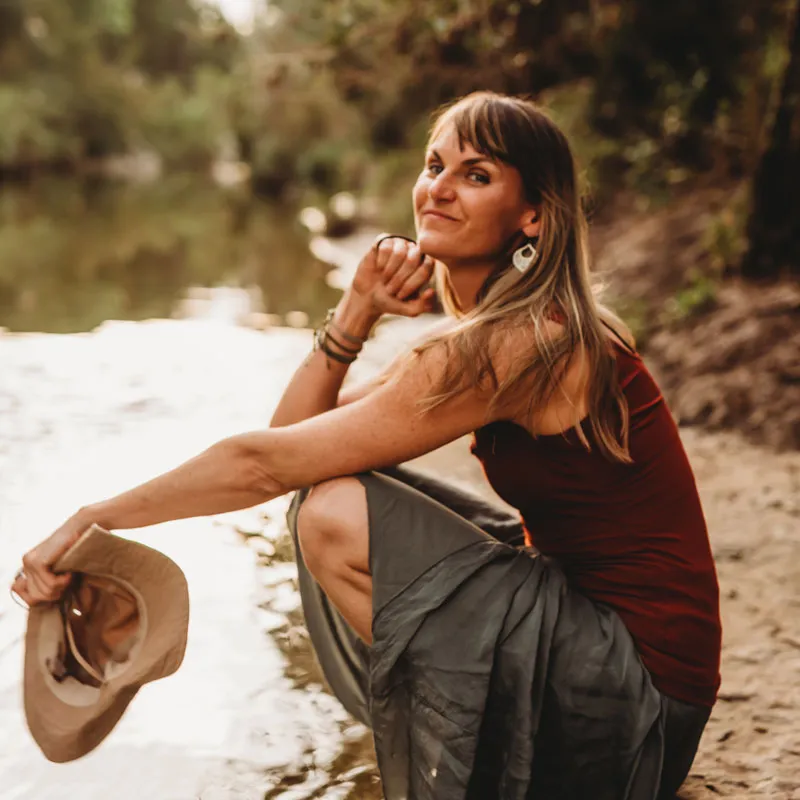
As a deaf child growing up in Florida, Crider dreamed of following in their father’s footsteps and working in nature. Their father was a wildlife biologist, and they imagined themself working in nature. Instead, they were repeatedly steered toward careers considered “more suitable” for deaf professionals.
“I always wanted to work in nature,” they say. “I always wanted to be a wildlife biologist like my dad. But I never saw deaf people like myself in that profession.”
Instead they became a teacher, filmmaker, and university media manager. On paper, everything was going well. Internally, they were struggling.
After years of stress and burnout, Crider experienced a mental health crisis. “I became suicidal, having suicidal thoughts,” they say.
A medical leave led them to Alaska, where they spent a month surrounded by wilderness. “I spent about two weeks just walking on trails every day and feeding chickens and learning about plants and health, and I just immediately felt better.”
The experience reset the trajectory of their life.
A New Approach to Nature Therapy
Back home, Crider discovered the Association of Nature and Forest Therapy (ANFT), completed certification as a forest therapy guide, and began introducing other deaf and disabled individuals to the healing power of nature.
Today, through The Wild Cypress, Crider is an accessibility consultant and trainer for ANFT, helping adapt curriculum and training programs for a broader range of participants. Through their cross-country journeys in a converted shuttle bus, they have guided thousands of people through workshops, training, retreats, and nature experiences, often bringing the experience to them, pulling them from their classrooms and workspaces to “bathe” in nature.
Their most innovative work has found a home in Putnam County, Florida, where they’re a young entrepreneur creating disability representation in a new space.
A 1900 farmhouse surrounded by cedar, cypress, bamboo, and pine trees, has become the place where The Wild Cypress can host its educational programmes. The property is slowly being transformed: a former trash pit has been transformed into a wildlife pond that now attracts frogs, butterflies, and other native species; traditional lawn areas are being rewilded into pollinator meadows; and trails are slowly taking shape as Crider learns the land and restores its ecosystem, creating a place where The Wild Cypress can flourish. This is only the beginning of change.
Leaning away from “retreat center,” they identify The Wild Cypress as a wellness farm and educational center. A wellness farm feels rooted in the land itself. Guests aren’t coming for luxury amenities. They are coming to reconnect with nature, with themselves, and with one another. Unlike traditional therapy or structured recreation programs, forest therapy is less about instruction and more about invitation.
In forest therapy, they explain, “the forest is the therapist, and we’re just the guides.” They remind us that nature welcomes all. “All feelings, all abilities. Nature doesn’t judge.” Their wellness farm is the first of its kind.

Inclusion as Nature Intended
That philosophy has profound implications for accessibility. “Disability comes from social constructs, so we just need to remove those constructs.” Everyone has a meaningful way of connecting with nature, and as a guide they prioritize helping each individual find that connection. “Maybe I can’t hear the birds,” they explain, “but I have a different way of connecting with them.”
Crider can’t give us a model for what an inclusive retreat looks like, because it’s an ongoing, individual invitation. The property, while not fully ADA compliant, is slowly being re-designed to provide support and access. “We have ADA accessible bathrooms, but our trails are not cement sidewalks. We do have connections with local organizations that can provide an EcoRover, an ADA accessible wheelchair.”
Rather than deciding what participants can or cannot do, they begin by asking questions. “What are their fears? What are they used to? What are they not used to?” they say. “I never tell someone what they can or cannot explore. You don’t need to be physically able to hike to enjoy the forest. The forest still provides its medicine however you want to move- by walking, crawl, fly, jog, etc. The benefits are more profound the slower you go, from being still and wandering with curiosity”
For destinations looking to create more inclusive outdoor experiences, that mindset may be more important than any specific accommodation. Crider believes many accessibility barriers are internal rather than physical. “People are so uncomfortable trying to figure out how to navigate disability,” they say. It’s important to make it a conversation every time, to work together to find a way to participate in a truly meaningful way.
Representation is one way they address that challenge. When hosting Deafblind retreats, they intentionally involve facilitators who are DeafBlind themselves. “It’s important that the leader is someone who looks like them,” they say. “I create programs where people feel like they do belong and also inspire them as well.”
The results can be transformative. One wheelchair user with a spinal cord injury registered for a retreat expecting to be turned away after disclosing their disability. Instead, Crider reached out and asked how they could make the experience work. The participant attended, returned for a second retreat, and eventually became a certified guide, trained by Crider.
Lessons on Inclusion for the Travel Industry
For destinations, attractions, and tourism professionals, perhaps the biggest lesson from The Wild Cypress is that inclusion begins long before someone arrives.
It starts with the assumption that everyone belongs. Crider’s ongoing goal is to make sure no one is left behind. Once there’s a shared goal of inclusion, we can navigate the uncomfortable conversations of how to overcome barriers together. They’ve seen the most powerful transformations through just being empathetic and determining “what can we co-navigate together,” a term that comes from the DeafBlind community. “It’s you and me together. We’re experiencing it together – no one is more or less.”
As Putnam County continues to develop its eco-tourism identity, Crider sees opportunities not only to attract visitors but also to deepen their connection to the natural world. “Many people don’t realize that Florida has all of these beautiful spaces. It’s exposure to important parts of our ecosystem.” They believe everyone needs a dose of nature “to survive better, to have better purpose, to take care of themselves.”

In a tourism industry increasingly focused on sustainability, wellness, and accessibility, that may be one of the most important lessons nature has to teach.
Joining the Inclusive Retreat Movement
When asked what advice they would share for anyone looking to begin something similar they remind us that it’s not a competition. “We can’t work in isolation. We need partners.” They’re still doing this themself–both to teach others and to learn. “Be brave to connect with different people – no matter how busy you think they are.” Remember, it’s you and me together.
As a deaf child growing up in Florida, Crider dreamed of following in their father’s footsteps and working in nature. Their father was a wildlife biologist, and they imagined themself working in nature. Instead, they were repeatedly steered toward careers considered “more suitable” for deaf professionals.
“I always wanted to work in nature,” they say. “I always wanted to be a wildlife biologist like my dad. But I never saw deaf people like myself in that profession.”
Instead they became a teacher, filmmaker, and university media manager. On paper, everything was going well. Internally, they were struggling.
After years of stress and burnout, Crider experienced a mental health crisis. “I became suicidal, having suicidal thoughts,” they say.
A medical leave led them to Alaska, where they spent a month surrounded by wilderness. “I spent about two weeks just walking on trails every day and feeding chickens and learning about plants and health, and I just immediately felt better.”
The experience reset the trajectory of their life.
A New Approach to Nature Therapy
Back home, Crider discovered the Association of Nature and Forest Therapy (ANFT), completed certification as a forest therapy guide, and began introducing other deaf and disabled individuals to the healing power of nature.
Today, through The Wild Cypress, Crider is an accessibility consultant and trainer for ANFT, helping adapt curriculum and training programs for a broader range of participants. Through their cross-country journeys in a converted shuttle bus, they have guided thousands of people through workshops, training, retreats, and nature experiences, often bringing the experience to them, pulling them from their classrooms and workspaces to “bathe” in nature.
Their most innovative work has found a home in Putnam County, Florida, where they’re a young entrepreneur creating disability representation in a new space.
A 1900 farmhouse surrounded by cedar, cypress, bamboo, and pine trees, has become the place where The Wild Cypress can host its educational programmes. The property is slowly being transformed: a former trash pit has been transformed into a wildlife pond that now attracts frogs, butterflies, and other native species; traditional lawn areas are being rewilded into pollinator meadows; and trails are slowly taking shape as Crider learns the land and restores its ecosystem, creating a place where The Wild Cypress can flourish. This is only the beginning of change.
Leaning away from “retreat center,” they identify The Wild Cypress as a wellness farm and educational center. A wellness farm feels rooted in the land itself. Guests aren’t coming for luxury amenities. They are coming to reconnect with nature, with themselves, and with one another. Unlike traditional therapy or structured recreation programs, forest therapy is less about instruction and more about invitation.
In forest therapy, they explain, “the forest is the therapist, and we’re just the guides.” They remind us that nature welcomes all. “All feelings, all abilities. Nature doesn’t judge.” Their wellness farm is the first of its kind.
Inclusion as Nature Intended
That philosophy has profound implications for accessibility. “Disability comes from social constructs, so we just need to remove those constructs.” Everyone has a meaningful way of connecting with nature, and as a guide they prioritize helping each individual find that connection. “Maybe I can’t hear the birds,” they explain, “but I have a different way of connecting with them.”
Crider can’t give us a model for what an inclusive retreat looks like, because it’s an ongoing, individual invitation. The property, while not fully ADA compliant, is slowly being re-designed to provide support and access. “We have ADA accessible bathrooms, but our trails are not cement sidewalks. We do have connections with local organizations that can provide an EcoRover, an ADA accessible wheelchair.”
Rather than deciding what participants can or cannot do, they begin by asking questions. “What are their fears? What are they used to? What are they not used to?” they say. “I never tell someone what they can or cannot explore. You don’t need to be physically able to hike to enjoy the forest. The forest still provides its medicine however you want to move- by walking, crawl, fly, jog, etc. The benefits are more profound the slower you go, from being still and wandering with curiosity”
For destinations looking to create more inclusive outdoor experiences, that mindset may be more important than any specific accommodation. Crider believes many accessibility barriers are internal rather than physical. “People are so uncomfortable trying to figure out how to navigate disability,” they say. It’s important to make it a conversation every time, to work together to find a way to participate in a truly meaningful way.
Representation is one way they address that challenge. When hosting Deafblind retreats, they intentionally involve facilitators who are DeafBlind themselves. “It’s important that the leader is someone who looks like them,” they say. “I create programs where people feel like they do belong and also inspire them as well.”
The results can be transformative. One wheelchair user with a spinal cord injury registered for a retreat expecting to be turned away after disclosing their disability. Instead, Crider reached out and asked how they could make the experience work. The participant attended, returned for a second retreat, and eventually became a certified guide, trained by Crider.
Lessons on Inclusion for the Travel Industry
For destinations, attractions, and tourism professionals, perhaps the biggest lesson from The Wild Cypress is that inclusion begins long before someone arrives.
It starts with the assumption that everyone belongs. Crider’s ongoing goal is to make sure no one is left behind. Once there’s a shared goal of inclusion, we can navigate the uncomfortable conversations of how to overcome barriers together. They’ve seen the most powerful transformations through just being empathetic and determining “what can we co-navigate together,” a term that comes from the DeafBlind community. “It’s you and me together. We’re experiencing it together – no one is more or less.”
As Putnam County continues to develop its eco-tourism identity, Crider sees opportunities not only to attract visitors but also to deepen their connection to the natural world. “Many people don’t realize that Florida has all of these beautiful spaces. It’s exposure to important parts of our ecosystem.” They believe everyone needs a dose of nature “to survive better, to have better purpose, to take care of themselves.”
In a tourism industry increasingly focused on sustainability, wellness, and accessibility, that may be one of the most important lessons nature has to teach.
Joining the Inclusive Retreat Movement
When asked what advice they would share for anyone looking to begin something similar they remind us that it’s not a competition. “We can’t work in isolation. We need partners.” They’re still doing this themself–both to teach others and to learn. “Be brave to connect with different people – no matter how busy you think they are.” Remember, it’s you and me together.