Interview with Dajana Gioffrè on Online Accessibility
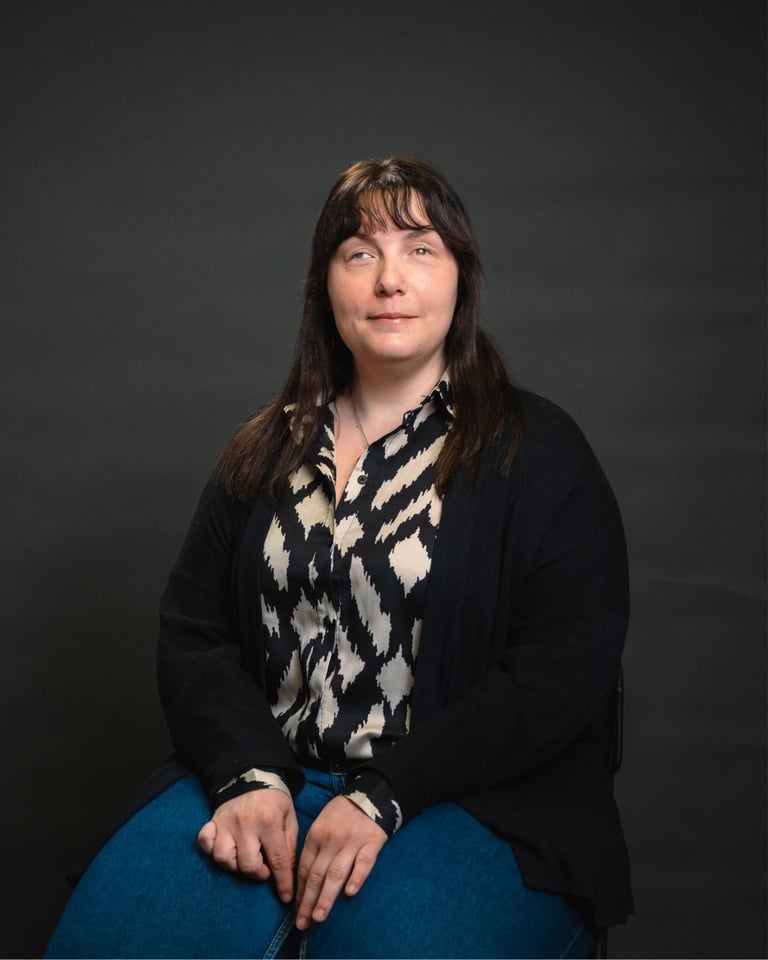
Navigating online isn’t a simple experience for everyone: in Italy, 1 in 5 people report having difficulty reading, listening to, or understanding digital content, and 15% admit they often abandon online activities due to accessibility-related obstacles. This is where AccessiWay comes in, a European company specializing in digital accessibility that helps businesses and organizations make their websites inclusive. To better understand the Italian landscape and explore how accessibility can become a concrete opportunity for everyone, we spoke with Dajana Gioffrè, Chief Visionary Officer at AccessiWay, psychologist and specialist in Universal Design, who is visually impaired and has long been committed to defending the rights of people with disabilities. Drawing on her experience in research, advocacy and digital innovation, Gioffrè walks us through users’ daily challenges, the main barriers that still exist online, and the strategies needed to build a truly inclusive digital experience.
The AccessiWay–YouGov research shows that 1 in 5 Italians struggle to read, listen to or understand digital content. How serious is the issue of digital exclusion in our country today?
It’s a major issue with two dimensions: first, the large number of people excluded from the digital world, and second, the consequences this exclusion has on their lives. It’s hard to imagine, but the number of individuals affected by digital accessibility issues is very large. AccessiWay places strong emphasis on people with disabilities who are excluded from the web, because it represents a violation of their rights, one among many. But in reality, even someone who is color-blind or not particularly tech-savvy needs to rely on an accessible website. Accessibility, after all, is rooted in clarity and ease of use, fundamental factors that allow someone unfamiliar with technology to still achieve their goals. And since the Covid-19 pandemic, this issue has become even more impactful: social, work and organizational interactions have shifted increasingly online. Think of telemedicine or job interviews. For many people, performing these tasks is a daily struggle that ends up excluding a portion of the population from an increasing number of activities, creating social isolation.
@ckeidkekci Love this book! #BookTok #storytime #usa ♬ original sound – Lily-reading
15% of users say they interrupt an online activity or purchase due to accessibility issues. What does this mean not only for individuals but also for businesses?
This is something I experience on a daily basis. I am a completely blind person, and for me, online shopping is extremely convenient because it allows me to explore all the product details – but only if the e-commerce site is accessible. Most of the time, however, I’m forced to stop the purchasing process because of an inaccessible step. This causes frustration or forces me to rely on someone else, which undermines my dignity. Personally, what often happens is that I then speak negatively about the brand with the inaccessible site and, whenever possible, avoid the purchase altogether, choosing instead another website that sells the same product but is accessible, even if it means spending more than I originally planned. The consequences seem obvious: like me, many people with and without disabilities abandon their purchases in frustration and anger; what they then do is return to the site where they can complete the purchase and recommend it in dedicated forums where people exchange suggestions on brands that are suitable for shoppers with disabilities.
In 2025, which barriers are the most detrimental: invasive pop-ups, slow websites, unclear instructions or poor mobile optimization? Which are easier to fix, and which require a deeper design culture shift?
From my experience using a screen reader, and based on insights from the disability community, the biggest problems involve an excessive number of pop-ups and alerts on a page, as well as the incorrect labeling of buttons or other page elements, which makes it hard to navigate and understand which buttons are needed to complete an action. These issues can be solved through concrete actions geared toward digital accessibility. However, there is something that inevitably requires support by design: the user experience. If an e-commerce purchasing flow – or any call to action – is difficult for the user to manage, the site may be technically accessible, but the experience will not be. To perform this kind of evaluation, which truly centers the user, the best approach is to rely on the users themselves, organizing user tests in which people with disabilities test the websites and give their feedback on accessibility and, most importantly, usability.
@sophiechristiansencbe Top tips for digital accessibility… Is your content accessible to everyone? #digitalaccessibility #disabilityawareness #inclusivedesign #toptips #contentcreator #accessibility ♬ original sound – Sophie Christiansen CBE
Considering that over 13 million people in Italy live with a permanent or temporary disability, how would you assess the awareness level among institutions and businesses?
I think the best adjective to describe the awareness of businesses and institutions on these topics is “unripe”. The topic of people with disabilities has finally reached corporate and institutional agendas, but awareness is still low. This process began thanks to legislation: the same laws that allowed people with disabilities to be hired in companies and public administration, and which granted the right to digital accessibility through the so-called Legge Stanca and later the European Accessibility Act. Now it’s time for this somewhat unripe awareness to evolve into something truly concrete: first by acknowledging the existence of these users and workers inside and outside organizations, with a shift that places accessibility (understood as access for all to physical and digital spaces) at the center, considering it an investment that increases productivity for workers with disabilities and ensures that consumers can spend their money as they wish.
From your experience, which digital barrier most commonly limits the participation of people with visual disabilities?
In my experience, the most impactful digital barrier is related to managing one’s finances: it happens far too often that, due to a banking platform update, accessibility is compromised, and the result is that people can no longer manage their own money. This has a tremendous impact on a person’s life, privacy and autonomy. Imagine being an adult with a salary who makes decisions independently every day and suddenly, without doing anything wrong, you can no longer manage your finances. The second major area of impact is accessible books: access to culture is a major issue for people with visual disabilities, and if a book is accessible, it is essentially the only way a blind person can access that content.
The survey shows that 86% of Italians consider accessible design essential. Why, then, do so many organizations keep postponing it?
I believe the reason behind such a high percentage is that no one doubts accessibility is the right thing to do, but the general perception is that it is not particularly important or that the number of people affected is not that large. I am often told that few people with disabilities are seen on the street. My answer is always the same: if it takes you three times more effort than someone else to move from one place to another, you’re far less likely to leave your home. This is why people with disabilities are made invisible and not perceived as the world’s largest minority, which, in reality, we are.
@suegh8629 ♬ original sound – suegh8629
When it comes to “digital literacy,” which skills are most lacking among users, companies and institutions?
In terms of accessibility, the main gaps concern understanding the existence of and interaction patterns with digital interfaces using assistive technologies. Many people wonder how a blind person can use the internet, or, more simply, a computer or a smartphone. It’s time for this knowledge to circulate more widely.
Which sectors are leading the change, and which show the most resistance?
The banking sector, likely due to the sensitive nature of its services as mentioned earlier, and the cultural sector, with museums acting as front-runners.
What is your vision for Italy in the next five years: is it realistic to imagine a digital ecosystem that is truly accessible to everyone?
It will certainly be more accessible, but not fully. There is still a long way to go in terms of changing mindsets, and we must continue working through laws that recognize people with disabilities as active agents in their own lives. I believe that in five years platforms and websites will be more accessible, but not all of them.