

Written by Spinalpedia, May 18, 2026
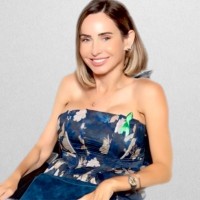
In the historical city of New Orleans you’ll find Macy Lauren Ledet, Esq., a lawyer, survivor, mother and someone on wheels you’ll never forget.
Her unforgettable nature however doesn’t come from her legal career or a case that went viral. No, it’s for her personal resilience; an impressive quality that has had a starring role in her life for the last 6 years.
See how sustaining a spinal cord injury has challenged Ledet to become something bigger, and has opened her eyes to a mission she intends to dedicate her life to.
A Life Transformed at 37
Ledet, now an estate law specialist, began her law career in 2016 as a criminal defence attorney as well as doing family law representation. She also worked as a personal trainer, went on to get married and became the mother of two young children all while building her career. Ledet was living life on her own terms. “I was in the best shape of my life, a great place in my career, and my children were thriving. I could not have asked for a better life at that moment,” she says.
Ledet’s life however was thrown off-course when she was paralyzed in a motor vehicle accident in 2020. “I was injured in a car accident on February 21st, 2020. My children and I were on our way home when a semi RV made an illegal U-turn into a 4 lane highway and collided with our vehicle going 55 miles an hour on impact.” Although Ledet’s children are 14 and 16 now, they were 8 and 10 when they were in the crash.
Her children were ok in the incident, Ledet however fractured her 5th and 6th cervical vertebrae, with the injury damaging her spinal cord. She was diagnosed with an Asia A-complete injury, but she was determined to get as much function back as possible despite her doctor’s diagnosis.
“Every single doctor I met those first six months had me convinced my life was over. I knew nothing about what the future could look like because I was told these interventions (nerve transfer surgery, epidural stimulation) I would eventually have within the next year, didn’t exist. When I moved my leg on my own, and was able to show my doctor in the hospital, he said it doesn’t matter because it would not change a thing. He refused to change my diagnosis. It was a crushing blow.”
With the help of her best friend, Ledet found there were potential interventional recovery pathways. She first discovered a new surgery called “brachial plexus surgery.” “I was previously told tenodesis would be my life. I was told not to stretch my fingers because I would need them to pick up things like a claw. Boy was I wrong to listen to this without verifying.”
She went on to undergo a surgery that took a live nerve and connected it to a dead nerve, she explains, allowing the live nerve to grow a millimeter a day into a nonworking nerve area. “Eventually, between nine and 12 months, those nerves will grow down your forearm into your fingers. This creates a strong potential for tricep, forearm and finger function,” she says.
“Since my nerve transfers, I can eat with normal utensils, drink out of normal glasses, paint my nails, use scissors, type on a computer, open doors, cook, clean, drive a car, open my mail, and much much more! I can help fix my daughter‘s hair, and most importantly, I can hug my kids.”
After her injury, she also became involved in the Split Second Foundation, a spinal cord injury based neuro recovery center. She also discovered Veritable Neuro Facility in Guadalajara, Mexico, a clinic offering epidural stimulation to patients with spinal cord injuries after extensive research and outreach.
“There are several programs that are tailored to your individual body and neuro pathways. A device is placed in your spine between the lumbar and thoracic levels, and when certain programs are turned on, you’re able to utilize your upper and lower core function, your legs and knees are capable of locking, and there is even a program for taking steps. I have videos of this in my highlight reels under ES Mexico.”
“The epidural stimulator has also helped with me not needing spasm medications or nerve medications. I’m a huge proponent of natural medicine and I stay clear of the gabapentin, baclofen, and any other nerve quieting medications. The goal is to keep the nerves alive.”
Simply put, Ledet was able to prove her doctors wrong when it came to function return, and now she wants to share that knowledge with newly injured individuals. She plans on starting a nonprofit that will be called MACK Forge, partially named after her, and its mission will be to provide free knowledge-based access to specific interventions, depending on the person’s level of injury and recovery path needs. “MACK stands for Movement. Advocacy. Community. Knowledge. My nickname since I was a little girl has been ‘Mac.’”
There’s a lot more her foundation will be doing as well, says Ledet, which will be launching this summer. “MACK Forge’s mission is to persevere in the face of everything that’s meant to break you, but armed with the knowledge to get there much faster than I did. I wish I had a ‘me’ back then. And since I didn’t have one, I figured it was time to create one,” says Ledet. “I can’t really give too much away (launching in Summer 2026), but let’s just say no one with SCI or the like will ever have to wonder what to do next, where and how to get it, and what the future may hold for them in a world where functional recovery is no longer a dream.”
Discovering Her Inner-Advocate
Outside of function return, Ledet felt compelled to become a disability advocate after her injury. Soon after she became visibly disabled, Ledet began to notice the inequalities that exist. “One of the first things I recognized when I first became paralyzed is that people didn’t speak to me. They spoke around me. If someone was standing next to me, they would ask that person: Would she like some water? Does she have an ID? Is she in pain right now? There was an automatic assumption that because I was disabled I was incapable. It was infuriating to be honest.”
“I’ll be cliché and say the world is not built for us. Everywhere I go I have a plan A, B, C, D, and even E. Every place I go, every appointment, every dinner reservation, any travel arrangement, every hotel, every airline- I call them and ask them all the pertinent questions to be able to better prepare myself to exist in that “new” environment.” “I have a portable ramp with me everywhere I go because I automatically assume the building or home won’t be accessible and I want to be able to accommodate myself .”
Being the lawyer, former trainer and marathoner she is, Ledet wasn’t ready to accept this as the status quo. Fortunately, her fight with her doctors was the fuel she needed for her next battle.
“When I first entered the advocacy world in 2021 it was because I decided to use my platform as Miss Wheelchair Louisiana USA to advocate for interventions that lead to functional recovery in quadriplegia. I held the title for two years. In 2023, it was through Split Second Foundation in New Orleans, LA. SSF is the only SCI based Neuro recovery center in Louisiana,” describes Ledet.
“It wasn’t that I didn’t know about the Center prior, I wasn’t ready to be a part of that world yet. I was still dealing with a lot of mental health issues as a result of the accident. I was still working on letting go of my previous life and learning to embrace my new life. Little did I know, subconsciously, I was already advocating for others before I became part of the SSF family.”
Reflecting, “First – I became a patient advocate, worked closely with the paralysis center at Harvard (Dr. Justin Brown) to share my story so that others would be armed with knowledge and opportunity,” she says. “Next, I joined the Split Second Foundation as a fundraising member, then became gala chair, and eventually and at present, board secretary. I’m more involved with the future of SCI recovery in and for the city of New Orleans.”
Ledet has also became involved with the Unite 2 Fight Paralysis Foundation. She attended their annual symposium for her first time this year; an event that updates the community on SCI research progress. “This past February 2026 really illuminated the very important work this organization is doing, from a congressional perspective. This group of advocates is on fire and will definitely be a major ‘collective catalyst’ to the future successes in spinal cord injury functional recovery.”
And her advocacy has created another mission – to bring awareness of ABT (Activity – Based Therapies).
“At present, I am working with others in the spinal cord community to bring the first ever national ABT conference to the city of New Orleans in the fall of 2027. This will be a first of its kind, educating on ABT specific recovery techniques to rehabs across the country, in support of these major, functional interventions, such as nerve transfers, tendon transfers, epidural stimulator, stroke / brachial plexus recovery, and TBI. We just had our first ‘round table – opening meeting’ discussing logistics and parameters of what the future of a yearly conference might look like. This is with the hope of making this an annual event in the city of New Orleans where training in ABT therapy can be consistent on a national scale. Excited to see how it all turns out!”
“I’ve been asked,” says Ledet, “to come back and advocate for a second year at the assembly house in Boston through Massachusetts Walks as a key speaker where I intend to help them achieve a $5 million allocation to a spinal cord injury recovery fund.”
And she’s working towards a proposition for specific allocation for a spinal cord injury fund for the state of Louisiana, based on the template utilized by Senator Bradley‘s office in the Massachusetts assembly. “The goal is to benefit spinal cord injury centers -for rehab, research, and recovery- in the state of Louisiana.”
Parenting Post-Injury
Outside of work, parenting has also been a new world after her injury. Even though things are now different, says Ledet, she knows that her ability to parent is still effective. “I am two very different mothers. The mother pre-injury was in the front and backyard playing baseball, basketball, soccer, building tree, houses, zip lining with my kids. I refused to pay anyone to do anything I can do myself,” she says. “But this other Mom is still here- And this mom has taught her children about perseverance through the struggle, compassion, loyalty, love in the most unconditional form.”
She also says she’s more intentional about the time she spends with her children. “Every moment is a potential for a memory.” ” I’m still there for every event, every important milestone. I’m up all night studying with them, rushing from place to place to make sure they get there on time. I still give them all of my hugs and kisses, listen to their highs and their lows, and hold them like babies when they’ve had too hard of a day.”
Ledet does have one regret however when it comes to her children after injury. “My only regret is that I waited so long to find this Mom. I could’ve been there more in that first year or two. More present, more intentional, but I wasn’t ready. I suffered so much loss. I didn’t become this renewed ‘amazing’ mother overnight. I still struggle every single day wishing I could give them more, but I do know I give them everything I have, and for them, that’s enough. For anyone who is struggling as a paralyzed mother, I am with you, and you are enough.”