
Written by Allaina Humpreys for Spinalpedia, November 12, 2025
It seems like a far off dream for wheelchair-users to live in a world where they can freely visit their neighbors and family and friends’ homes without a care about accessibility, but that reality exists in Bolingbrook, Illinois thanks to Visitability, a housing code ordinance that was passed 22 years ago. This law in fact is what attracted Allaina Humphreys, a resident and C5-6 quadriplegic, to move to Bolingbrook with her family.
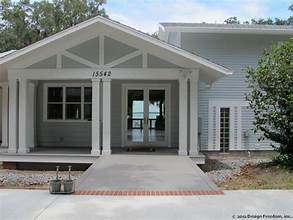
“I first learned of the housing standards before we moved to Bolingbrook in 2005. In fact, we chose this town mainly because it had codified Visitability,” says Humphreys. “This law requires new single-family homes to have at least one no-step entrance, a wide doorway, and an accessible bathroom on the first floor. This made it possible for me to purchase a home in a neighborhood that was already being developed, with many accessible features in place.”
Originally passed in 2003, Visitability is a housing code law that disability advocates like Humphreys would love to see expanded to other cities across the country, and making this a reality is a battle she is ready to take on. “The biggest hurdle is not the cost, but rather perception,” she says. “Builders often assume that ‘accessible’ means ‘institutional,’ or that their target customers wouldn’t want these features. Bolingbrook demonstrates that it is possible to create beautiful homes that cater to everyone.”
Becoming an Accessible Housing Advocate
Humphreys journey in becoming a disability advocate, specifically an accessible housing advocate, didn’t happen overnight. In fact, it took several years after her spinal cord injury for her to find that voice. “Initially, I was focused on solving access issues in my own life,” she says. Paralyzed at the age of 15 in a gymnastics accident in 1993, Humphreys had to first learn how to live as a quadriplegic, and then learn how to live as an adult.
“Every day brought new challenges, both practical and social. I made it my mission to show people that disability isn’t something to fear. It wasn’t always easy; I’ll never forget the stares, the anxious parents pulling their children away, or the strangers who bluntly told me, ‘I’d rather be dead.’” And it was these experiences, Humphreys says, that helped her become resilient.
“They shaped how I confront barriers today, whether physical or social. I learned that most obstacles can be overcome with determination, understanding, and kindness.” Through her 20s and 30s, Humphreys went on to become an experienced graphic designer, and she was also married and had three children, two of which included twins. “Since I was already a quadriplegic when my husband and I got married, he knew that a lot of the childcare responsibilities would fall to him. We always had a plan for dividing the workload: I focused on breastfeeding and preparing baby food for our little ones, while he took charge of diaper changes and dressing.”
Becoming a mother, says Humphreys, now 47 years old, empowered her in more ways she could’ve ever imagined. “Before my children, I often found myself accommodating others to their comfort, but motherhood awakened my inner ‘Mama Bear.’ I’ve discovered a wellspring of strength and determination that empowers me daily. This newfound courage has transformed me into an advocate, not just for my children but for various communities.” “I soon realized that many others faced similar challenges without any support,” she says.
One of Humphreys’ first missions as a disability advocate was helping in the arts sector. “My journey with the Arts Council began in 2015. Almost immediately, I worked to get the council on board with increasing access to art and self-expression for people with disabilities.” After organizing a one day adaptive glow paint event, that effort grew into a larger one known as “The Celebration of Special Recreation” which just celebrated its fourth anniversary. It offers people with disabilities a chance to try 15 different adaptive recreation activities.
Humphreys’ next target as a disability advocate was public accessibility. In Naperville, Illinois, she became a founding member of the Accessible Community Task Force in 2016. “I advised local government and businesses on how to exceed ADA standards and strive for true inclusion. Additionally, we partner with local college OT classes on accessibility audits of the community.” And in 2023, Humphreys was selected for the Backbones Leader Program; a program she says that changed the perspective of herself as a woman with a disability
“Before participating in this program, I totally ignored my disability,” she says. “While I had engaged in activities I only had access to because of my disability, like wheelchair rugby, I was totally disconnected from my appearance, my movement, and my differences; I couldn’t even look at photos or videos of myself.” After the year-long, monthly training, which included interaction with a cohort, it allowed her to integrate her disability into her identity for the first time, which has helped Humphreys in her advocacy journey. She also became a registered advocate with the United Spinal Association.
Humphreys’ advocacy also led her to other important issues, including founding Bolingbrook Pride. And she participated in the Illinois Women’s Institute for Leadership Training Academy – an intensive training focuses on how to run a campaign, get elected to public office, and engage in public service. “I aspire to run for public office to ensure that the voices of people with disabilities are not just consulted, but also inform and guide policy decisions,” says Humphreys.
How Visitability Works
The Visitability ordinance made it possible for Humphreys to purchase a home in a neighborhood that was already being developed, with many accessible features already in place. “In Bolingbrook, I wouldn’t have to spend tens or hundreds of thousands of dollars to add these features later,” which is one of the biggest selling points of this ordinance. “Later, I learned that we are one of merely a handful of places worldwide that have passed this into law. As of this year, more than 4,600 homes—about 25% of the housing stock—have been built to these accessibility standards.”
“I wasn’t aware of how singular Bolingbrook was in this regard when we first moved there; I just knew it was conveniently located halfway between my in-laws and my mother, who promised to help with childcare if we moved closer,” says Humphreys when she moved to Bolingbrook. “We chose this town mainly because it had codified Visitability. This law requires new single-family homes to have at least one no-step entrance, a wide doorway, and an accessible bathroom on the first floor.”
As one can imagine, getting Visitability passed in any city isn’t easy. In Bolingbrook, it was a personal story that helped the ordinance cross the finish line. Then-Mayor Roger Claar was moved to support the ordinance after he witnessed his friend Ed Bannister struggle with the high cost of modifying his home after being diagnosed with a degenerative condition that caused him to use a wheelchair. Along with the changing demographics of the town, which included more aging residents and families with diverse needs, the Mayor used these facts to help pass the ordinance.
This support from the Mayor is essentially what helped the ordinance pass in 2003. “Positioning it among fewer than 10 places worldwide with such a law,” adds Humphreys. All future builders were also told by then-Mayor that they would have to find alternative locations to build if they were “uncertain” about Visitability. Now, over 20 years later, this ordinance is not only still in effect, it has created a utopia-like community for wheelchair-users that Humphreys loves.
“The dignity and choices available to people with mobility disabilities in Bolingbrook are unparalleled. Living this experience made me realize how important it is to share this information with the world.”
Getting Visitability Passed in More Cities
“I believe that accessibility is the next frontier of civil rights. While we’ve made public spaces more inclusive, homes continue to have barriers that isolate too many people,” says Humphreys, who wants to bring Visitability to more cities and teach others how to pass the ordinance in their city or town. “You need to begin by identifying common ground among all parties involved,” she says as to the first step in advocating for Visitability.
“Position the discussion as a form of thoughtful planning rather than as special treatment. Highlight the cost savings associated with including a no-step entry during construction—this feature costs almost nothing when built on a slab foundation and less than $5,000 when added over a basement, compared to tens of thousands of dollars for a retrofit later.” After that, she recommends gathering builders, advocates and local officials to collaboratively design solutions that are tailored to their housing stock. “I’m currently developing a playbook to facilitate this process, based on the model used in Bolingbrook,” says Humphreys.
Advocates may also find that one of the biggest hurdles in getting Visitability passed is the perception of it. “Builders often assume that ‘accessible’ means ‘institutional,’ or that their target customers wouldn’t want these features. Bolingbrook demonstrates that it is possible to create beautiful homes that cater to everyone.” Humphries also has a list of answers to common pushbacks of the ordinance, one of which is aesthetics. “No-step entries can be both elegant and unobtrusive,” she says. “Most people can’t tell the difference from street level. If a grand, multi-step entrance is desired, a no-step entry can be placed in the garage or around the back of the house instead of at the front door.”
Other common pushbacks are drainage, cost and demand. “Many people assume that only wheelchair users benefit from no-step entries,” says Humphreys, “but they actually assist everyone—parents with strollers, delivery workers, individuals with temporary injuries, and aging residents. Homes with accessible features can also be marketed to individuals with disabilities and those who wish to age in place, broadening the potential customer base.”
Humphreys also wants advocates to remember that when advocating for Visitability, it’s important to focus on personal stories. “Start at the local level. Identify champions within your village board or city council. Use Bolingbrook as an example of success; builders remained in the area, property values increased, and residents appreciate the enhanced sense of community. Focus on sharing stories rather than just statistics. Change occurs when people can recognize the benefits firsthand.”
When you boil down what Visitability is all about, it’s about freedom, says Humphreys, and that is unparalleled. “Housing determines freedom, without the ability to enter homes, individuals cannot fully engage in community life. Visitability offers people choices regarding where to live, whom to visit, and how to age safely. It promotes dignity, equity, and opportunity for all.”
— Contact Allaina via IG: https://www.instagram.com/allainahumphreys/